[ 03 ] Open source · Local + cloud
Audio Sonic MCP
One audio-analysis engine for agents and musicians. It extracts BPM, key maps, audio embeddings, and production characteristics through an MCP server and a CLI.
The core engine runs locally without API keys. The README also documents optional SSE and hybrid transports; SoundReverse uses a separate Modal-hosted MCP build.
Inside the build
MCP server and local CLI
The same analysis engine is available as an asynchronous FastMCP server for agents and IDEs and as analyze_file.py for local audio files. Local analysis needs no API key or cloud dependency; YouTube URL ingestion needs a network connection.
Asynchronous jobs
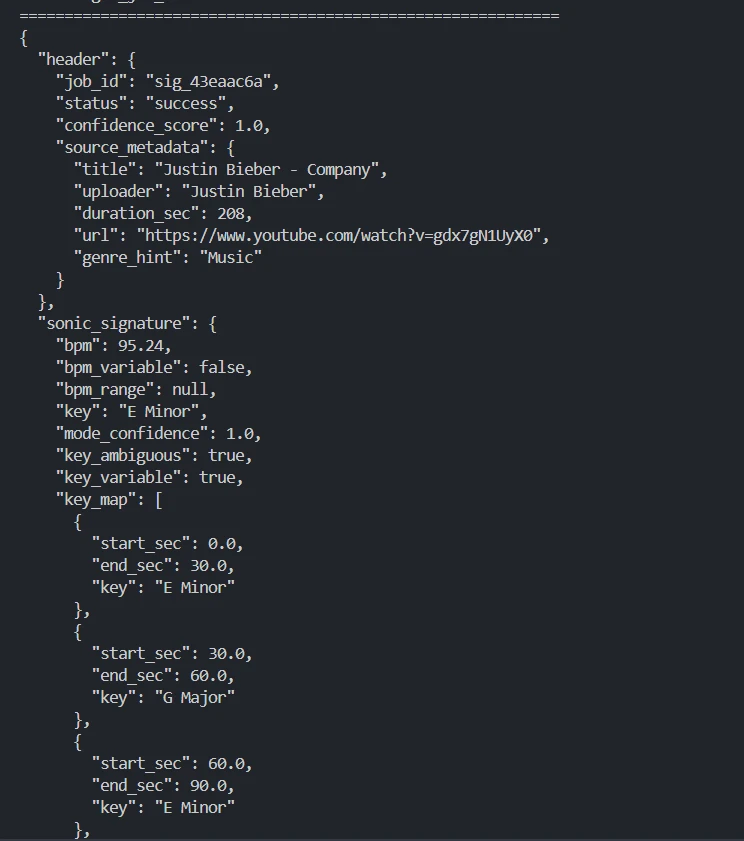
get_sonic_signature returns a job ID so an agent can continue without waiting for heavy audio processing. The client checks get_job_status and collects the structured result when ready. A global serialization lock protects CPU and VRAM by running inference jobs sequentially.
Six-stage pipeline
The pipeline runs six stages: ingestion and validation, optional yt-dlp download, FFmpeg conversion to 44.1 kHz WAV, Demucs stem separation, librosa rhythm and tonal analysis, and CLAP embeddings. It uses transactional checkpoints for reliability.
Structured sonic signature
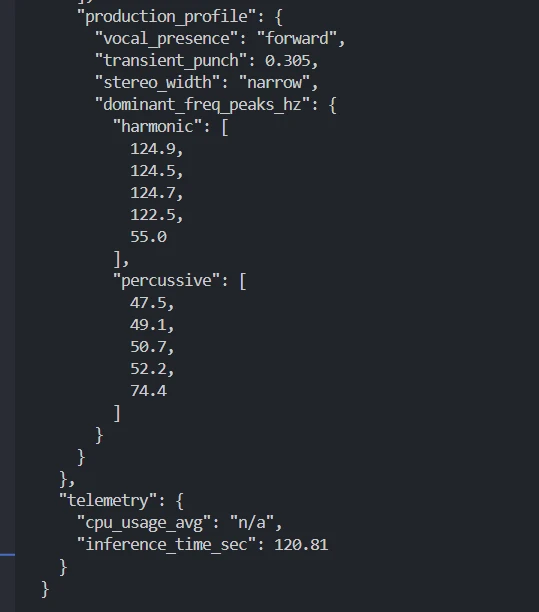
The output includes tempo and variable-tempo detection, a section-by-section key map, vocal presence, transient punch, stereo width, dominant frequency peaks, confidence, and a 512-dimensional LAION CLAP vibe vector with mood and style tags.
Graceful fallback
The optional [clap] installation enables Demucs and CLAP. Without it, the engine falls back to HPSS and classical librosa features and omits vibe tags. It uses CUDA when available and CPU otherwise.
Local and remote transports
The default MCP transport is local stdio. Optional SSE and hybrid modes expose remote MCP and an HTTP API. SoundReverse’s README documents a separate Modal-hosted MCP server for its audio analysis; that deployment is distinct from the local-first setup documented here.